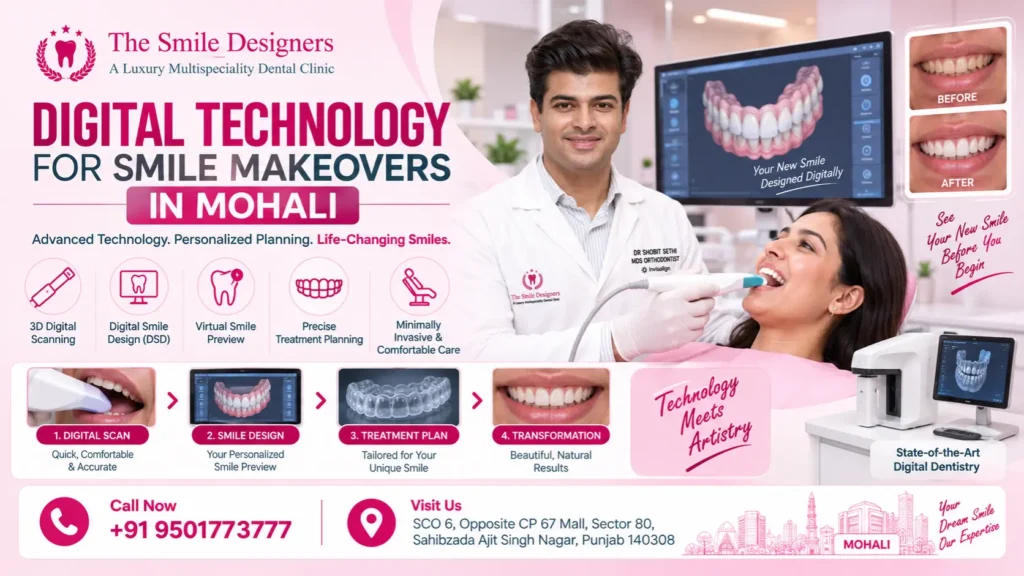
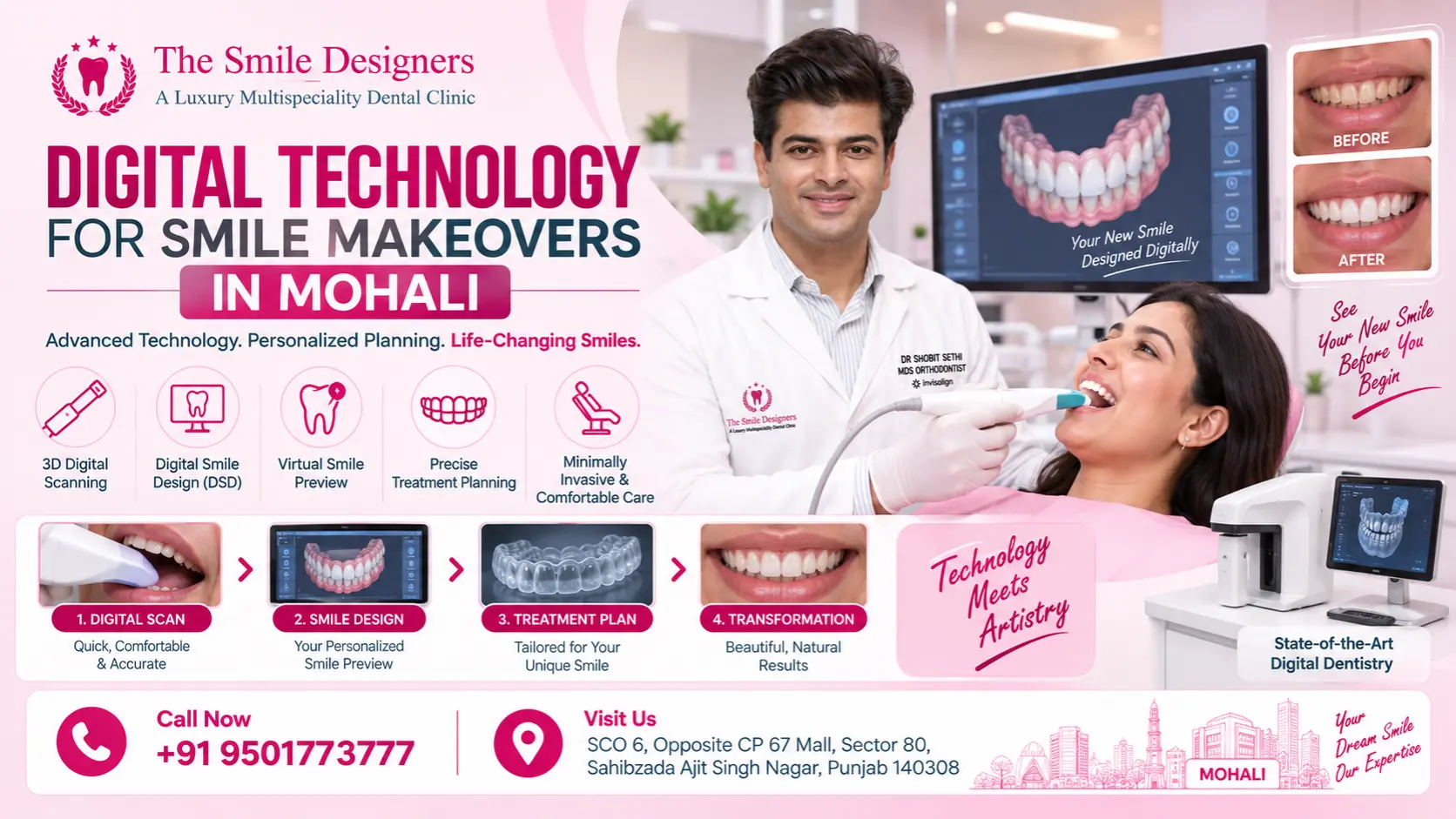
Smile makeovers look different now than they did a few years ago, mainly because dentistry uses new tools. In the past, plans leaned a lot on mouth impressions, printed photos, and what the clinician could see in person.
Now many dentists blend those older steps with digital methods. Digital technology for smile makeovers in Mohali may include intraoral scanning, clear digital images, smile analysis, and software based treatment planning.
With these tools, dentists can save digital records of teeth. They can also look at a patient’s smile from more than one angle. Patients may be shown a digital view of the expected changes before any work starts.
Even with all this, the dentist’s experience and clinical thinking still matter most. Technology adds extra data that can support diagnosis, help with planning, improve talks between dentist and patient, and guide treatment choices.
This guide points to ten dental professionals and clinics/practices based on publicly available professional info. It isn’t a formal national ranking. The intention is simple: just help patients, compare skills and pick the right kind of dental care that fits.
Did you know:
Digital scans can help in clinical work, but they are not always the better option. One review and meta-analysis looked at full-arch cases. It reported mixed findings when digital and traditional impressions were compared. In many studies, the prosthetic results fell in acceptable accuracy limits. Still, the authors noted that the results did not line up well across the included papers. They said that more consistent research is needed.
What Is Digital Technology in a Smile Makeover?
Digital smile makeover technology refers to digital tools used to assess, visualize, plan, or support cosmetic dental treatment.
It is not a treatment by itself. Instead, it forms part of the wider digital dentistry for smile makeover workflow.
Depending on the case, this workflow may include:
- Digital dental photography
- Intraoral scanning
- 3D digital models
- Digital smile analysis
- Computer-aided smile design
- Smile simulation technology
- CAD/CAM systems
- 3D printing
Modern digital dentistry includes technologies such as intraoral scanners, digital imaging, CAD/CAM systems, and 3D printing. These tools show up in restorative care, prosthodontics, orthodontics, and more.
How Does the Digital Smile Makeover Process Work?
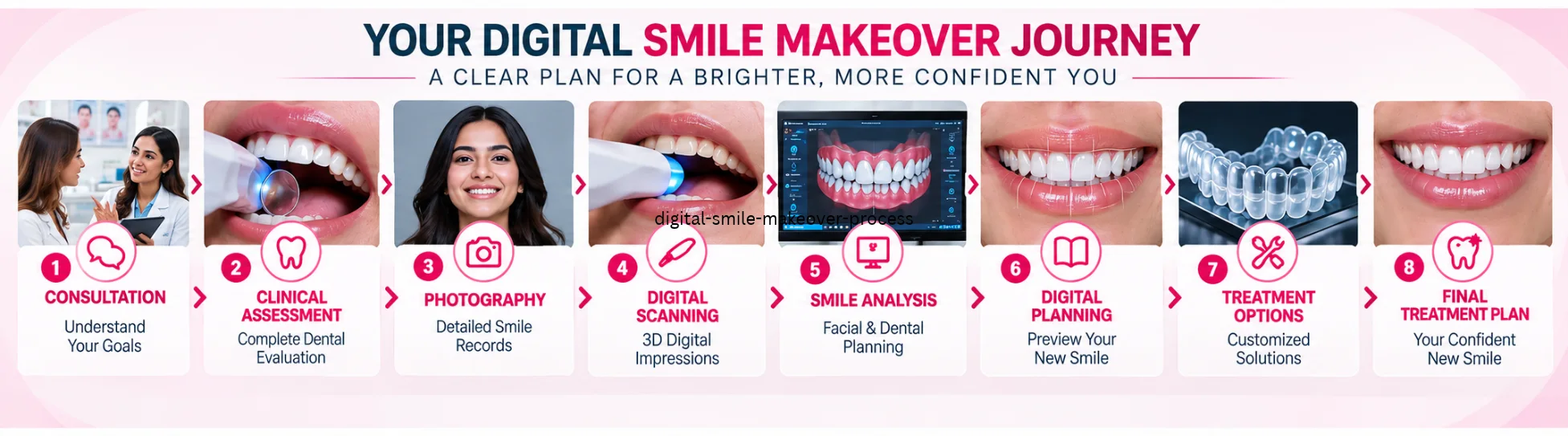
Each person gets a slightly different path. The steps also change with the type of work being planned. Still, most workflows follow the same general path. First comes collecting records. Next is reviewing the data. Then the team sets up the plan.
| Stage | Digital Tool | Main Purpose |
| 1 | Dental photography | Capture the teeth, the smile, the lips, and facial traits |
| 2 | Intraoral scanner | Make a digital impression of the teeth |
| 3 | Smile design software | Check shape and look, then evaluate fit with aesthetics |
| 4 | Digital simulation | Show what the suggested smile could look like |
| 5 | CAD/CAM or 3D printing | Make the restorations or models, and support appliances when needed |
1. Digital dental photos and face study
A good smile plan looks past just the teeth. Dentists can take digital photos that show the face, teeth, gums, and smile. With these images, they can judge symmetry in the face, the smile lines, lip position, and tooth size ratios.
They can also look at how teeth look when the person smiles. This kind of work is often called facial analysis for smile design. Digital Smile Design steps may use both face and dental photos.
Those pictures give the dentist reference lines to use. With the references, the dentist can check how the face, lips, gums, and teeth relate.
2. Intraoral scanning and 3D scanning
For smile planning, an intraoral scanner is a small device placed inside the mouth. It records the tooth surfaces and makes a clear virtual model. This process is known as intraoral scanning for smile design.
Modern intraoral scanners can create detailed optical impressions and high-precision virtual models. Their applications now extend into diagnosis, treatment planning, monitoring, and CAD/CAM workflows.
For suitable cases, digital impressions for teeth may replace some conventional impression methods. The resulting 3D dental scanning data can also be stored, reviewed, and shared within a digital workflow.
3. Computer-Aided Smile Design and Treatment Planning
The collected information can then become part of smile makeover treatment planning. Dentists may combine photographs and scans with smile design software dentistry tools.
From that model, a 3D smile design can be built. It is based on what the patient already has, plus the patient’s facial features.
In computer assisted smile design, the dentist may look at:
- tooth length and width
- tooth form
- tooth placement
- symmetry during a smile
- gum height
- tooth proportions
- how teeth meet the lips
- overall face balance
Choosing the best dentist in Mohali for a smile makeover still matters. Many people also want to know what kind of tools the clinic uses. Digital methods can help the dentist spot tiny problems more clearly.
After that, the dentist lays out what comes next for you. They base the plan on your dental needs and your face shape. It is not a single shape used for everyone.
4. Preview tools and smile simulation
A digital smile preview can show what a proposed change might do to the smile. Smile simulation technology can also help the dentist talk through possible shifts in tooth shape, size, alignment, or proportions.
This can make it easier for the dentist and patient to understand each other. You should not treat a computer simulation like a final promise. The actual result in care still depends on things in the clinic and biology.
Technologies Dentists Use for Digital Smile Design
Dentists may use a mix of digital tools for a smile makeover. They often work side by side.
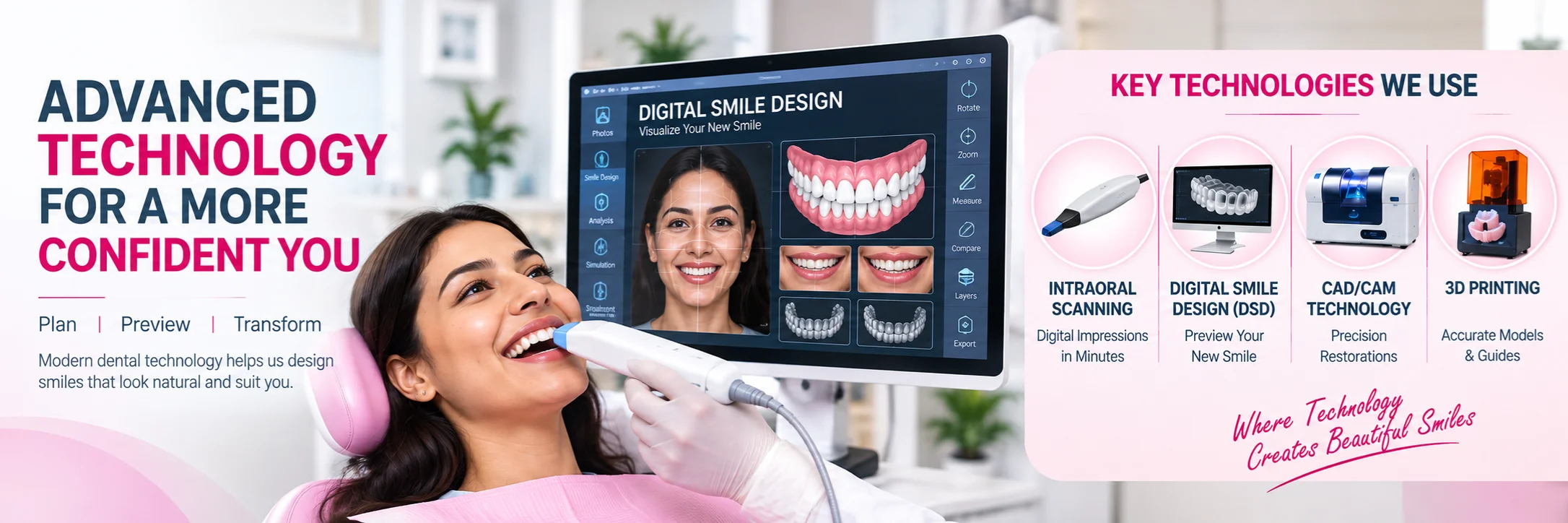
Digital Smile Design and the software
Digital Smile Design in Mohali may use photos, digital impressions, scans, and software planning. The software can support digital smile checks. It can also match tooth details to facial reference points. This helps guide the plan with more attention to the face.
CAD and CAM systems
CAD stands for computer-aided design. CAM stands for computer-aided manufacturing. With CAD/CAM in cosmetic dentistry, digital data can be used to shape and build certain dental restorations.
A common CAD-CAM setup starts with digital patient records. Then it uses computer design tools. It also uses manufacturing tools. In prosthodontics, these steps are seen a lot today.
What gets made depends on the situation. For some patients, the system can help with crowns. It may also be used for veneers. Other restorations are sometimes included too.
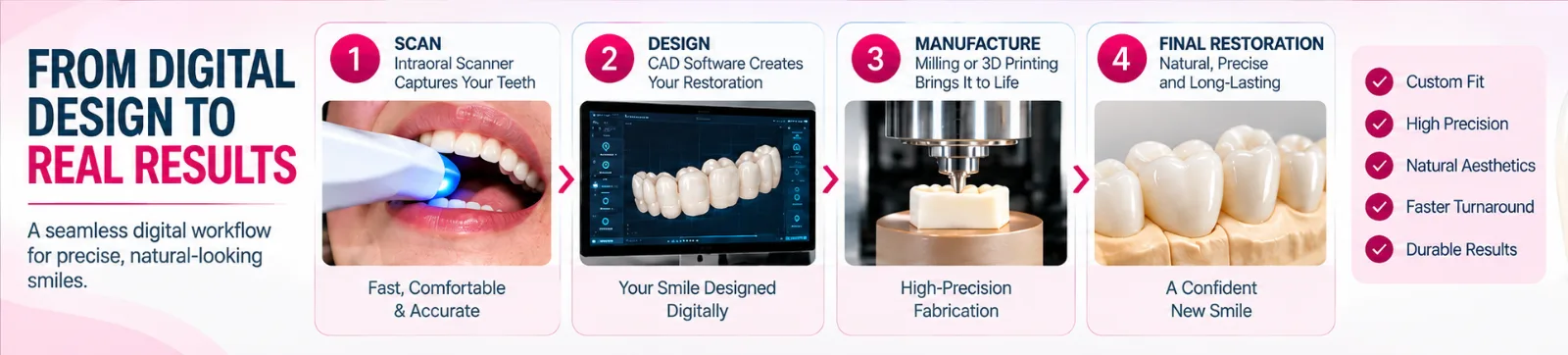
3D Printing and Digital Models
3D printing tools and digital files help carry out this plan. In cosmetic dental work, the team can turn certain digital designs into real items. Many times they print physical models so everyone can plan with something tangible.
They can also create template guides or fast test pieces when needed. The exact item that gets printed can change from case to case. A lab and a dentist may choose different options based on the order of the work and the specific steps.
Digital dentistry increasingly combines intraoral scanning, CAD/CAM, and 3D printing within connected workflows.
Digital Technology With Other Smile Treatments
A smile makeover may involve one treatment or several procedures.
Digital tools can support different parts of that treatment plan.
Digital Planning for Dental Veneers
A digital workflow for veneers can help evaluate the proposed shape and proportions of restorations. During digital veneer planning, the dentist may study tooth dimensions, alignment, symmetry, and facial relationships.
A veneer smile simulation may also help explain proposed aesthetic changes before treatment. Digital planning can then support the design process when veneers are clinically suitable.
Digital Orthodontic and Clear Aligner Planning
Digital dentistry also plays an important role in modern orthodontics. Clear aligner digital scanning creates virtual models of the patient’s teeth.
Digital records can also help with orthodontic planning. They can support planning for aligner treatment as well. Digital models are also used for simulations within orthodontic workflows.
Digital Planning for Crowns and Other Restorations
Digital tools can also support restorative dentistry. For example, digital crown design can form part of a CAD/CAM workflow.
The exact workflow depends on the tooth, restoration, materials, equipment, and clinical requirements. This wider use of Digital technology for smile makeovers can help connect aesthetic goals with restorative or orthodontic needs.
Benefits of Digital Dentistry for Smile Makeovers
Advanced technology in cosmetic dentistry provides dentists with additional ways to collect and study clinical information.
A few good points include:
- You get clear digital files.
- Teeth and face can be seen more clearly.
- Measurements are more exact and the scans show it in 3D.
- Patient talks can feel smoother.
- Dental lab updates can be sent in a more direct way.
- Care plans can be set for one person, not a one size fit.
- You can see a small set of planned changes with more clarity.
- Next steps with other dental work can happen faster.
With this kind of planning, some teams aim for a precise smile design. The overall plan can feel more organized. It can also help clinicians aim for a natural smile design. That design should fit the patient’s facial look. In some cases, digital tools can support plans for a less invasive smile makeover.
Still, digital tools do not guarantee the same outcome for every person. The quality of the evidence matters. Clinical limits also need careful review.
Does digital tech replace a dentist’s clinical skill?
No. It can help with planning, but it cannot take over real professional judgment. A digital setup cannot decide on its own if veneers, aligners, crowns, or another option fits.
The dentist still needs to evaluate:
- Teeth and enamel
- Gum health
- Bite and jaw relationships
- Tooth position
- Existing dental restorations
- Facial proportions
- Oral health
- Patient expectations
Current clinical research also stresses that professional judgment must remain central when digital technologies are used in dentistry.
Therefore, choosing suitable treatment involves much more than selecting the latest cosmetic dental technology.
What happens in a digital smile makeover consultation in Mohali?
Most visits start with a talk about what you want changed and what you hope to see. Next, the dentist checks your teeth, gums, your bite, and your general mouth health. Then the process may move into the planned steps, depending on your case.
Some people will use fewer digital tools than others. The dentist picks what to use after looking at your condition and the treatment plan.
If you are looking into a digitally planned smile makeover, you can also review the clinic’s available first, then bring your questions in during the consultation.
Final Thoughts
Digital dentistry now helps with new ways to check, show, and map out cosmetic dental work. With tools like intraoral scanners, digital photos, smile design software, CAD CAM systems, and 3D models, a clinic can build a clear plan.
If you’re thinking about a digital technology for smile makeover in Mohali, the key part is still a careful exam. Technology can help, yet the plan has to fit the person in front of you. Talk with a trained dentist to learn which digital tools and options match your dental situation.
Read More: Top 10 Best Dentists in India
FAQ
1. Can I see what my smile may look like before treatment?
In many cases, digital smile preview and simulation technology can help patients visualize proposed changes before certain treatments begin. The preview is primarily a planning and communication tool, and the actual clinical result can vary.
2. How does a 3D dental scan help with a smile makeover?
3D dental scan helps a smile makeover in a few clear ways. It makes a very detailed digital model of your teeth and nearby mouth structures. With that model, a dentist can check the tooth position and size. Next, the dentist can check how the teeth sit, how wide or tall they are, and how well they line up. Those checks matter when planning any changes to your smile.
3. What is an intraoral scanner, and does it take the place of old style impressions?
An intraoral scanner takes digital pictures inside the mouth and builds a 3D view. In many cases, it can cut down on the need for traditional impression material. Still, the best choice depends on what the patient needs for that specific care.
4. What kinds of smile makeover work can be set up with digital tools?
Digital smile makeover tools can help plan veneers, crowns, clear aligners, and orthodontic care. They can also support restorative and other cosmetic dental options. The exact list depends on the patient’s exam and needs.
5. Is Digital Smile Design right for every person?
Not for everyone. Fit depends on many things, such as gum and tooth health, the bite, the enamel condition, and any old dental work. It also depends on tooth position and the type of plan being considered. A full clinical visit is needed before deciding.
6. Does digital technology replace the dentist’s skill in smile design?
No. Digital technology is meant for help with planning and diagnosis. The dentist still must use real clinical judgment to review oral health, the bite, tooth structure, gum health, and how the smile looks with the face. The dentist also sets goals that match what can be done in a safe and realistic way.