There’s a reason a chipped or aching tooth bothers us more than it probably should. We use our teeth constantly, without thinking, until one of them stops cooperating. That’s usually when Dental Crowns come into the conversation. As one dentist likes to say, “A tooth that’s been repaired well is a tooth you forget about again.” That’s really the goal behind a good crown.
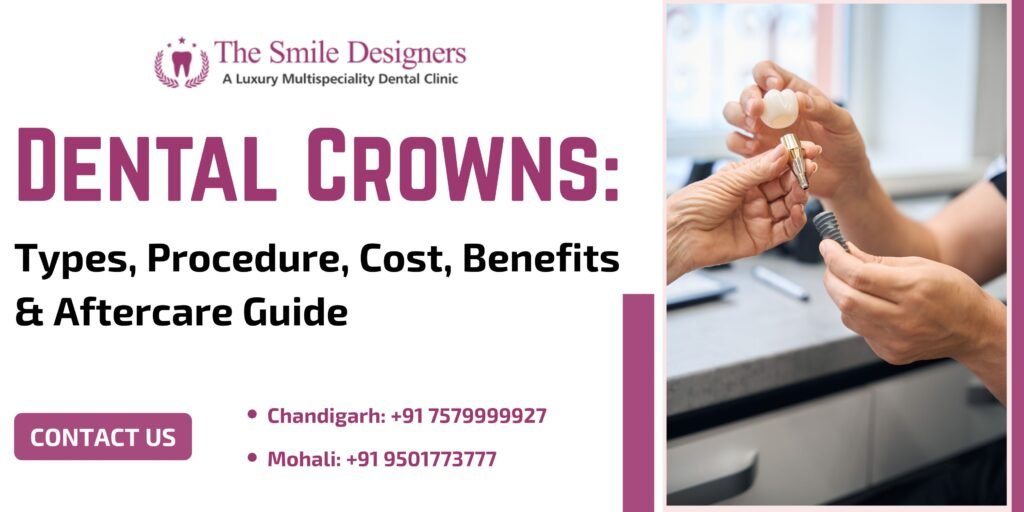
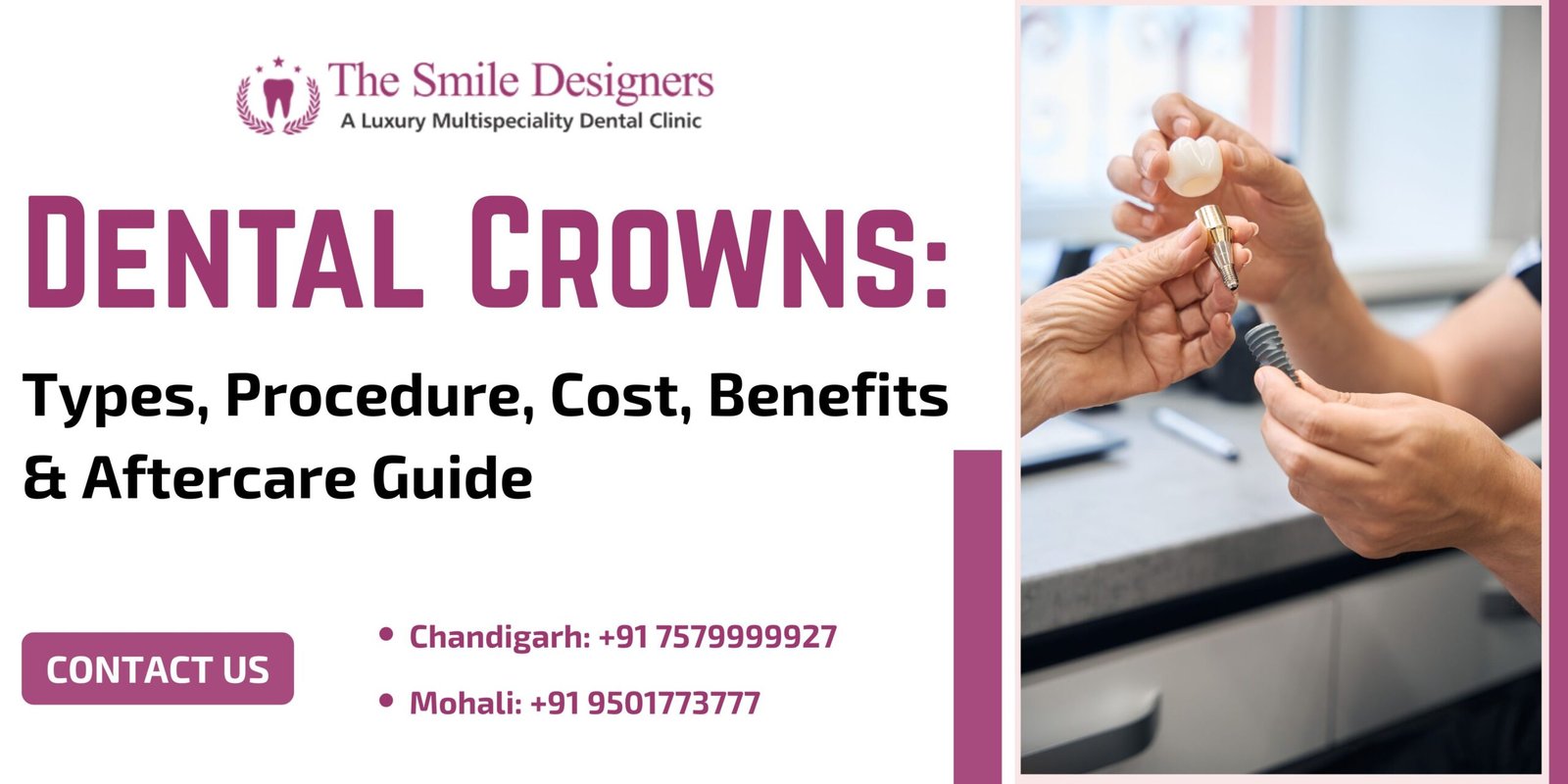
So what is a Dental Crown, exactly? Think of it as a custom-made cap that slides over a tooth that’s been worn down, cracked, or weakened in some way. People look into a Dental Crown Treatment for all sorts of reasons. Maybe a back tooth has been hurting while chewing. Perhaps a root canal was just completed, and the tooth now needs protection. Or an old filling has become too large for the remaining tooth to support. Or maybe it’s simply about wanting a smile that looks a bit more even.
Whatever the reason, this guide covers the materials used, how the Tooth Crown Procedure actually works, what tends to affect the Dental Crown Cost, the real Benefits of Dental Crowns, and how to take care of one once it’s sitting in your mouth.
What is a Dental Crown?
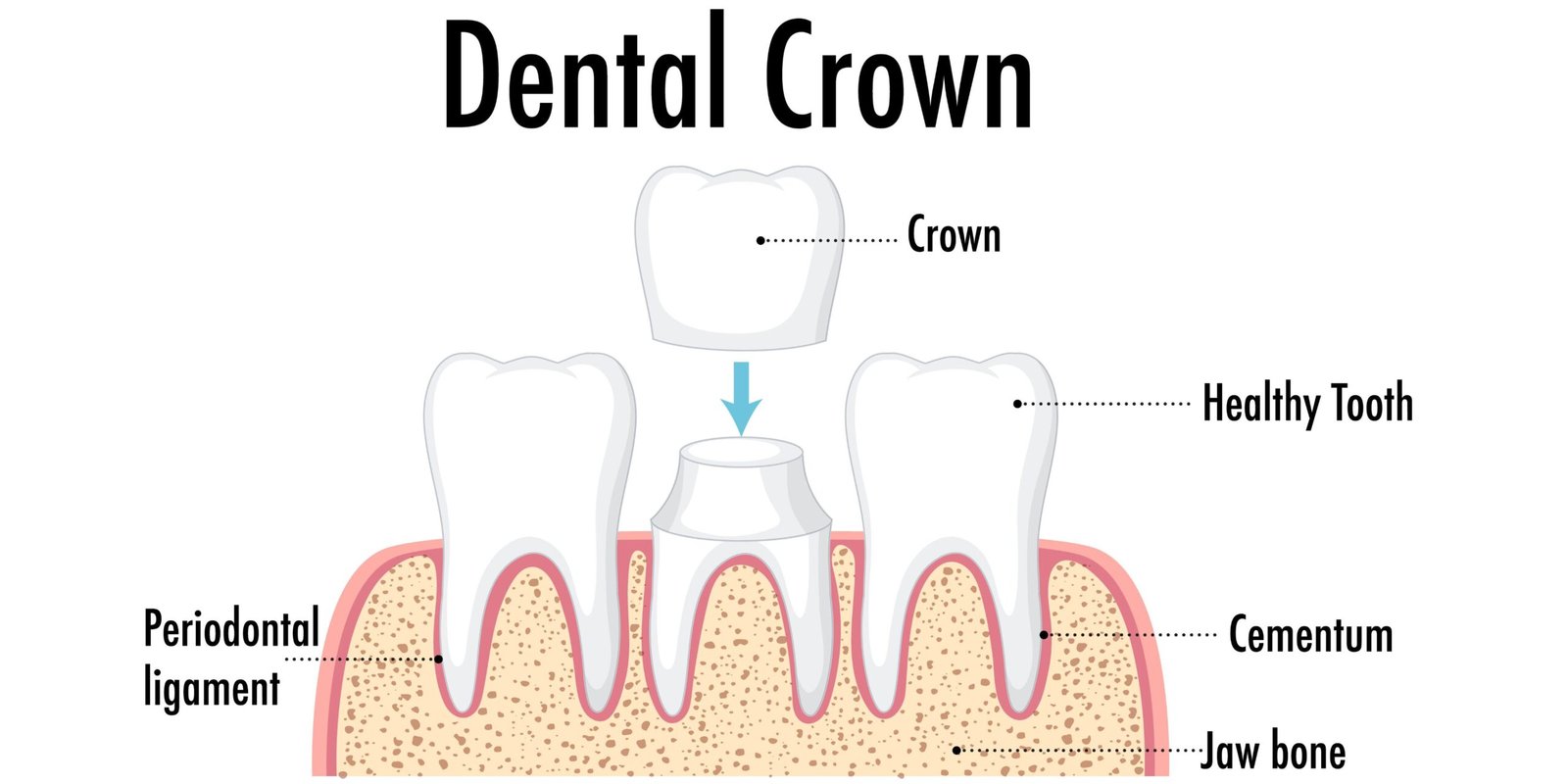
A Dental Crown (some people just call it a dental cap) is a tooth-shaped cover that fits right over the part of a tooth you can see. It’s different from a filling. A filling patches up a small area. A crown is a covering for the entire tooth above the gum line, similar to a helmet that a tooth gets when it has suffered severe damage. That’s why dentists typically recommend a crown when damage, cracking or breakage of a tooth exceeds what a filling can reasonably provide.
Tooth enamel is a special material: it is not replaceable if damaged or lost. This is the way teeth are supposed to behave. The crown takes the place of the tooth’s enamel, and it’s there to help protect the remaining tooth structure, so you can eat and drink without fearing it will fall out.
Who Needs a Dental Crown?
A crown isn’t just for one type of problem. People end up needing one for several different reasons, including:
- A cracked or broken tooth that needs extra support so it doesn’t crack further.
- A tooth that’s had a root canal, since a root canal crown keeps the now-fragile tooth from breaking.
- A tooth with a large filling that’s no longer strong enough to hold up on its own.
- Severely worn teeth, often from years of grinding or just general wear.
- Wanting a cosmetic smile improvement, where the shape or colour of a tooth needs fixing.
- Supporting a dental implant crown or helping anchor a dental bridge.
In short, cosmetic dentistry and restorative dentistry often overlap here. A crown can make a tooth look better while genuinely making it stronger underneath.
What are the Different Types of Crowns for Teeth?
It is important to know what each of the Types of Dental Crowns has to offer, when it comes to strength, appearance and cost. Generally, the best choice is determined by what tooth requires it, how often you’ll be showing it when you smile, and your taste.
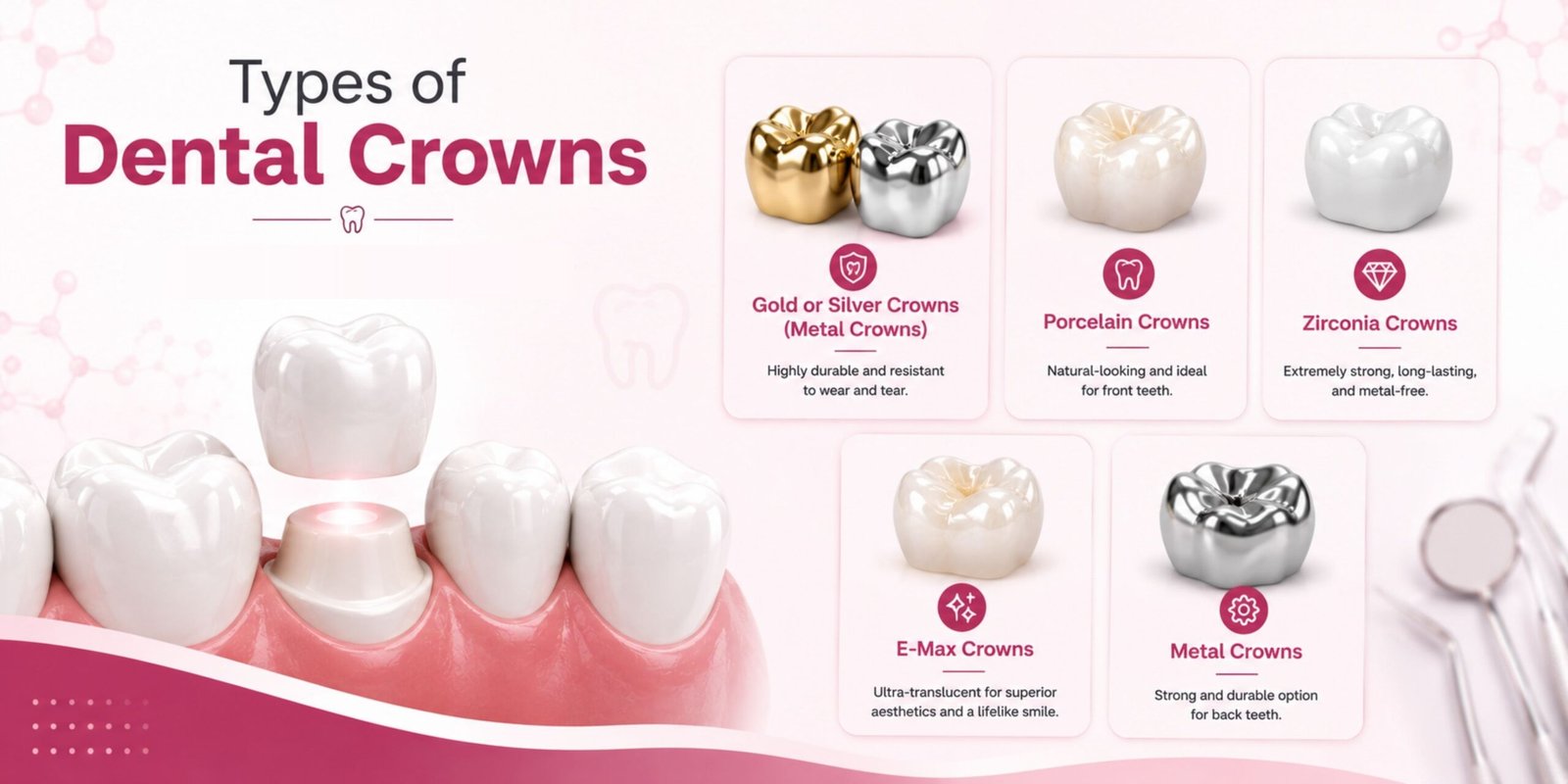
Gold or Silver Crowns Metal crowns:
Made from gold or similar alloys are tough. Dentists recommend them for back teeth where appearance is less of a concern and strength is more important, as they seldom chip or crack and hold up longer.
Porcelain Crowns:
These are constructed to fit in. In cosmetic dentistry, porcelain crowns are a popular choice for front teeth due to their tooth-coloured appearance and the fact that they look very similar to the rest of your smile.
Zirconia Crowns:
If strength is the priority, zirconia is hard to beat. Non-metal, pressure resistant and moderately natural, it can be used on both front and back teeth.
E-Max Crowns:
Crafted from a material referred to as lithium disilicate, e-max crowns are reputed to be the most lifelike of all the choices. They retain light the same way that natural teeth would, so they are often used on the front teeth where the look is a critical factor.
Metal Crowns:
These will be more affordable choices. They are not as natural but they are more long-lasting and therefore are suitable for more back teeth.
Did You Know?
According to the American Academy of Cosmetic Dentistry (AACD), veneers are the most commonly performed cosmetic dental procedures. A survey of five Gulf nations in 2023 found that nine out of every ten people were aware of the “Hollywood smile” trend. This shows that more people are becoming interested in improving their smiles with modern cosmetic dental treatments.
Dental Crown Procedure (Step-by-Step)
The Dental Crown Procedure isn’t complicated once you know what’s happening at each stage.
Step 1: Tooth Preparation
First, the dentist clears away any decay and shapes the tooth so there’s enough room for the crown to fit properly. This part of the Tooth Crown Procedure matters a lot, because a well-shaped tooth means a comfortable, secure Crown Placement later on.
Step 2: Impressions and Digital Scanning
Next comes the Tooth Impression step. The dentist either takes a mould of the tooth or uses a Digital Dental Scan to capture its exact shape. This gets sent off to a dental lab, where technicians build the custom crown.
Step 3: Temporary Crown Placement
While the real crown is being made, a Temporary Crown goes on in the meantime. It’s there so the tooth stays protected and you can still eat and talk normally while you wait.
Step 4: Permanent Crown Placement
Once the lab finishes, the dentist checks that the Permanent Dental Crown fits, looks right, and matches the surrounding teeth before bonding it in place with a strong Crown Cement. A quick Bite Adjustment follows, just to make sure everything feels right when you bite down.
Dental Crown Cost
When people ask about Dental Crown Cost, they’re typically looking for a straight answer, but in reality, the price depends on several factors. It’s a significant part of the material; a crown may be zirconia or say E-Max and that’s more expensive than a metal crown. The position of the tooth in your mouth also plays a role, as front teeth will typically require more accurate and natural looking work as opposed to the back molars. It also takes into account the lab that makes the crown and the dentist’s own experience, and, if a root canal is required prior to the crown, that is another piece of the puzzle. In simple words, the price of a dental crown depends on the material your dentist chooses, the complexity of your treatment, and whether you need any additional procedures before receiving the crown. The only way to find a definite answer for your case is to have a proper consultation.
What are the Benefits of Dental Crowns?
The Benefits of Dental Crowns go well beyond just looking good:
- They bring back normal chewing and biting strength
- They give real Tooth Protection to teeth that have gotten weak or fractured
- They improve how a discoloured or oddly shaped tooth looks
- They stop further damage by sealing the tooth off from bacteria
- They offer long-term Tooth Restoration when looked after properly
- They look natural enough that most people won’t even notice
Aftercare and Maintenance
Maintaining a crown is similar to maintaining a natural tooth, but there are a few additional considerations. Careful flossing around the edge of the crown and brushing twice a day is good enough Oral Hygiene. Hard nuts, too sticky food and ice should be avoided because these may cause a crown to be knocked off or damaged. A night guard can protect your crown from wearing itself down while you’re sleeping if you’ve got nightly teeth grinding. And remember to keep up your Dental Checkup visits. They’re the easiest way to catch small issues before they turn into bigger ones.
Why Choose The Smile Designers for Crowns Treatment?
If you’re looking into Dental Crowns in Chandigarh & Mohali, who you choose to treat you really does make a difference. The Smile Designers bring together experienced dentists, advanced digital technology that improves treatment accuracy, and durable crown materials designed for long-lasting results. At this Cosmetic Dentist in Chandigarh & Mohali, the team focuses on creating personalized treatment plans based on each individual’s specific needs instead of following a standard clinical routine, all in a relaxed and unhurried environment. Having people that will take time to explain things makes it easier whether you’re looking for a reliable Dentist in Mohali or just want a cleaner Tooth Crown Treatment in Chandigarh & Mohali.
Key Takeaways
- A Dental Crown covers the entire visible part of a tooth, unlike a filling, which only patches a small area.
- There are a number of reasons for needing a crown, such as a cracked tooth, a root canal, large fillings, or worn down teeth.
- The types of dental crowns vary from metal, porcelain, zirconia and E-Max, all of which work well on different teeth and needs.
- Usually the Tooth Crown Procedure requires two visits with a Temporary Crown on for the time that the Permanent Crown is in the process of being made.
- The price of Dental Crown is determined by the material, the position of the tooth, the quality of the lab and any additional pre-treatment necessary.
- A crown will last for as long as possible with good oral hygiene and regular dental checkups.
Final Words
Actually, dental crowns have two purposes: firstly, to restore function, and secondly, to restore esthetic function. If you have a cracked or weak tooth, it’s best to deal with the issue as soon as possible before it causes larger complications in the future. When in doubt, your initial step is to consult your dentist.
Looking for affordable dental crowns in Chandigarh & Mohali? At The Smile Designers, experienced dentists use advanced digital technology to create crowns that look and feel natural. Book a consultation and take the first step toward getting your smile back.
Frequently Asked Questions
Q1. How Long Do Dental Crowns Last?
Ans. A crown can reliably serve for a long time if it is well treated and examined on a regular basis.
Q2. Is it painful to get a dental crown?
Ans. Not really. You will be comfortable during the procedure with local anaesthetic and the soreness afterwards is soon over after a few days.
Q3. How much does it cost for a tooth to be crowned?
Ans. It is dependent on the material, location of the tooth, and preparation required, so please discuss specifics with your dentist.
Q4. What happens to your real tooth when you get a crown?
Ans. A thin layer of enamel gets reshaped to make room, then the crown covers and protects what’s left of your natural tooth.
Q5. Can a tooth be rotting under a crown?
Ans. Yes, it can happen if the crown doesn’t fit well enough or due to poor oral care, so regular check-ups are important!
Q6. Which type of dental crown is best?
Ans. There is no one “best” one. It all boils down to the tooth, what it should look like and how much money you have.
Q7. Can I eat normally with a dental crown?
Ans. Pretty much, yes. Once it’s fully set, you can eat like usual, just go easy on anything overly hard or sticky.
Q8. What should you avoid after getting a dental crown?
Ans. Avoid eating hard, sticky and super chewy foods for a while and don’t rush into it as it settles in.