

“The mouth is the gateway to health. And wisdom teeth, more often than not, knock loudly before they settle in.”
If you have ever felt a dull ache creeping in from the back of your jaw , one that seems to get worse at night or while eating , there is a good chance your wisdom teeth are behind it. This kind of pain is something a lot of people go through in their late teens or early twenties, and yet, very few actually know what to do about it.
Wisdom tooth pain can be dull or sharp, and a dull pain can also feel like a throbbing pain that spreads towards the ear or neck. This can lead to chewing problems, difficult sleep and real life problems. Fortunately, if you’re seeking immediate relief from your wisdom tooth pain or finally getting the care you deserve for that tooth, you’ll find answers that are clear and practical.
This blog covers everything, what wisdom teeth are, why they hurt, how to manage the discomfort, and when it makes sense to visit a dental professional.
What Are Wisdom Teeth?
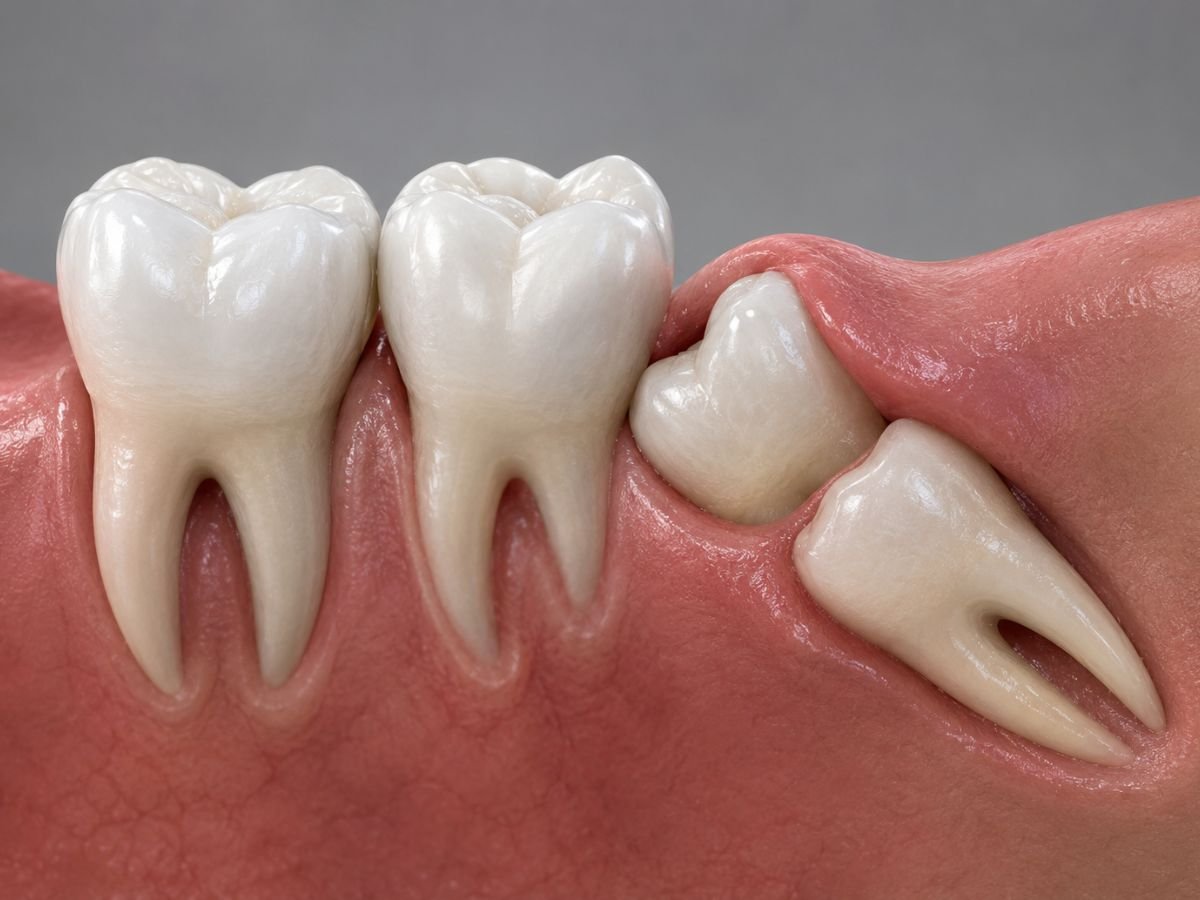
Wisdom teeth are the third set of molars, the last teeth to grow in, at the age of 17 to 25. They are located in the back of your mouth on the right and left sides of the upper and lower jaw.
They come in after all of your other adult teeth have come in, leaving little room for them. The answer to most of the problems is that. If a wisdom tooth does not have enough space to grow properly, it may become partially impacted, can press against neighboring teeth, or may become completely impacted. That’s when it gets troublesome.
Types of Wisdom Teeth Impaction
A wisdom tooth that doesn’t emerge properly is called an impacted tooth. This can occur in a number of ways:
- Vertical: Tooth is growing upwards, but it has not emerged completely from the gums.
- Mesial: The tooth is angled towards the adjacent tooth. This is the most typical one.
- Distal: Tooth is set at an angle away from the adjacent tooth (to the back).
- Horizontal: The tooth is lying completely sideways inside the bone , one of the more complicated positions.
- Partial Eruption: Tooth has erupted partially, leaving a flap of gum tissue covering it.
- Complete Impaction: The tooth is fully enclosed in the jaw bone, there is no tooth visible above the gum line.
All of these places have their level of risk and discomfort, and that’s why it’s so important to have an X-ray to understand what is going on below the surface.
What Causes Wisdom Tooth Pain?
The short answer to this question is: Not enough room. A wisdom tooth that is trying to break through an overcrowded mouth can exert pressure on the other teeth, gums and bone, causing pain.
The pain of wisdom teeth is most commonly experienced at the back of the jaw, and can radiate to the ear, the temple and even the throat. Some of the most common reasons this pain develops include:
- Pericoronitis – This happens when the gum flap around a partially erupted tooth becomes inflamed, usually because food and bacteria get trapped underneath it. It is one of the most frequent causes of acute wisdom tooth pain symptoms.
- Wisdom tooth infection – When bacteria invade the tissue around or inside the tooth, an infection can develop. This may come with noticeable swelling, fever, a bad taste in the mouth, and progressively worsening pain.
- Pressure on neighboring teeth – A growing wisdom tooth can push steadily against the second molar beside it, causing crowding, discomfort, and sometimes damage to that tooth’s root over time.
- Cyst formation – A fluid-filled sac can form around an impacted tooth, placing pressure on the surrounding bone and nerves.
- Tooth decay – Because wisdom teeth are hard to reach with a toothbrush, they are prone to decay. Cavities in a partially emerged wisdom tooth can lead to deep, throbbing pain quite quickly.
Did You Know?
Impacted wisdom teeth have a worldwide impaction prevalence of approximately 24%, and they have been associated with conditions such as pericoronitis, root resorption, periodontal disease, tooth decay, and the development of cysts. Left unmonitored, these complications can quietly progress before any visible symptoms appear.
Home Remedies for Wisdom Teeth Pain
Some people would like a little relief from their wisdom tooth pain before they are able to see a dentist. While these are ways to relieve wisdom tooth pain, they will not cure the issue, but they can certainly help alleviate the pain until you can get in to see a dentist.
- Saltwater Rinse: This is one of the most popular methods, and it does work. Gently swishing a cup of warm water containing a teaspoon of salt around your mouth for 30 to 60 seconds kills bacteria, soothes irritated gums and cleanses the area. The research has proven that salt water rinses do have genuine anti-inflammatory attributes and are a reliable initial salve for wisdom tooth discomfort alleviation.
- Ice Pack: Applying cold compress to the outside of the cheek will help to minimize swelling and help create a numbing effect on the region of the wisdom tooth pain. Place some ice in a clean cloth and apply to the affected side of the face for 15 minutes, then rest for 15 minutes. Do a few times during the day when necessary.
- Cloves and Clove Oil: Cloves have long been known to relieve toothaches; there is good scientific evidence for this. The compound, eugenol, is a natural numbing agent, and also has antimicrobial properties, which is the active component in cloves. Put a whole clove over the painful tooth or rub a little clove oil on a cotton ball and gently press on the tooth. Be sure to use this oil sparingly, undiluted clove oil may cause some soft tissue irritation in the mouth.
- Peppermint and Menthol: Peppermint leaves contain menthol that produce a cooling effect and help to alleviate pain for a short time. Soaking a cotton ball in peppermint extract and applying it to sore gums , or swishing with cooled peppermint tea , are both simple and safe ways to get some relief. Even if it is only temporary, it is actually quite calming to many people.
- Crushed Garlic and Ginger: Garlic and ginger is not a dental aid, but both these foods have antimicrobial and anti-inflammatory benefits. In studies, crushed garlic proved effective against gum infection bacteria, in particular. The two can be combined into a paste and applied gently to the affected area to control bacteria and alleviate discomfort.
- Turmeric: In fact, turmeric has been considered a natural pain reliever in numerous cultures, with its primary compound curcumin being known for its anti-inflammatory properties. The ground turmeric, a little salt and some small amount of mustard oil can be mixed to form a paste, which can be applied directly to the sore area and helps to alleviate the swelling of the gums surrounding a painful wisdom tooth. It is a safe, natural remedy that is effective when used in conjunction with other remedies.
Medical Treatments for Wisdom Tooth Pain
However, sometimes home remedies just aren’t adequate – particularly if the pain is more severe or if there is an underlying infection. If that’s the case, there are more specific remedies available either over-the-counter or as prescriptions:
- Wisdom tooth pain is typically best treated with ibuprofen as it will help to alleviate the pain as well as help to address the inflammation. It is a nonsteroidal anti-inflammatory drug (NSAID) that is a pain reliever that acts at the source of the swelling.
- For people who can’t take ibuprofen, acetaminophen is a good alternative. It does not directly target the inflammation in the body but rather draws on the signaling pathways that cause pain.
- Benzocaine gels are gels that numb the gum tissue applied directly to the area. They provide instant localized comfort and are easy to use.
- Prescription antibiotics become necessary when a confirmed wisdom tooth infection is present. These should always be taken under the guidance of a qualified dental professional , never self-prescribed.
It is important to understand that these medications manage symptoms but do not resolve the root cause. If pain keeps returning, that is a clear signal that a professional evaluation is overdue.
Benefits of Wisdom Tooth Removal
Wisdom teeth removal is one of the most common dental procedures performed, and it offers meaningful, lasting benefits for overall oral health. Here is why dental professionals often recommend it:
Prevents Pain and Swelling: Removing a problematic wisdom tooth eliminates the recurring cycles of inflammation and discomfort that can interfere significantly with daily life.
Protects Nearby Teeth: A crowding wisdom tooth places ongoing pressure on the second molar beside it. Over time, this can damage that tooth’s root and affect overall bite alignment.
Reduces Infection Risk: A partially emerged tooth is notoriously difficult to clean and becomes a breeding ground for harmful bacteria. Extraction removes that ongoing risk permanently.
Improves Chewing Comfort: Once a problematic third molar is removed, many patients notice a clear improvement in how comfortably and evenly they are able to chew.
Avoids Future Complications: Leaving an impacted tooth untreated can lead to cyst formation, bone deterioration, and eventually more complex surgical intervention down the line.
Stops Unexplained Referred Pains: Persistent headaches, jaw tension, and earaches that seem to have no obvious cause are frequently traced back to wisdom tooth pressure. After extraction, these symptoms often resolve on their own.
Pain After Wisdom Tooth Extraction
It is common to have pain following wisdom tooth extraction. The discomfort is usually at its peak on the third or fourth day after surgery, and should gradually decrease after that. Some swelling, slight bleeding and jaw stiffness are normal in the first few days.
To help recover and prevent complications:
- Post surgical, do not remove the gauze pad for the recommended time to stop your bleeding.
- During the first day or two put an ice pack wrapped in cloth on the jaws to control swelling.
- Do not use straws as this can cause the blood clot to dislodge in the socket, resulting in the painful condition of “dry socket.
- For the first 3 – 5 days, stick to soft foods like pureed fruit, scrambled eggs, mashed potatoes and yogurt.
- Avoid alcohol and fizzy drinks, and heavy exercise in the early recovery phase.
- Brush the remaining teeth as usual, but not the extraction areas until they are healed.
If pain or swelling increases after 4 days, or if you see pus, a high fever, or if you have trouble swallowing, contact your dentist or oral surgeon IMMEDIATELY. These can be symptoms of a wisdom tooth infection or dry socket that must be treated immediately.
When to See a Dental Professional
Home remedies and pain medications are temporary measures. There are certain situations where waiting is not advisable:
- Wisdom tooth pain that persists or gets worse over several days
- Visible swelling of the jaw, cheek, or neck
- Difficulty opening the mouth fully or swallowing
- Fever, chills, or a general sense of feeling unwell
- A foul taste or discharge from the gum near the tooth
- Pain that radiates to the ear, temple, or the opposite side of the jaw
A dentist will take X-rays to assess the exact position of your wisdom teeth, check for signs of infection or damage to adjacent structures, and advise whether monitoring, medication, or wisdom tooth extraction is the most appropriate course of action.
Final Thoughts
Wisdom tooth pain is uncomfortable, disruptive, and often difficult to manage on your own for long. But it is also one of those dental situations where acting early makes a genuine difference. The sooner you address what is going on, the more treatment options are available , and the less likely you are to face a more complicated situation later.
If you’re having a hard time getting to sleep at night while using a saltwater rinse, or you are ready to talk to a professional about wisdom teeth removal, the most important thing is to not ignore what your body is telling you. While oral health problems may seem to go away on their own, they can become more complicated as time goes on.
Whether you are in Chandigarh, facing wisdom tooth pain, the team at The Smile Designers is there for you, providing comprehensive and patient-centric treatment from the initial diagnosis to a complete recovery. Schedule your appointment and get the relief you need!
Frequently Asked Questions
Q1. How long does wisdom tooth pain last?
Ans. Typically, pain fluctuates for several days to weeks during the normal eruption process. If it is caused by impaction or infection, it will probably recur unless treated professionally.
Q2. What is the best painkiller for wisdom tooth?
Ans. Ibuprofen is effective because it functions in both the pain and inflammation. If ibuprofen is not a suitable choice, acetaminophen is a good option. Please use as directed and if using either regularly, please speak with your dentist.
Q3. How to get rid of wisdom tooth pain?
Ans. Begin with a warm saltwater solution rinse and cold compress. Use a pain reliever, as available without prescription. If it’s something that will last, consult a dentist and find out if you need extraction or other treatment.
Q4. How to cure wisdom tooth pain fast?
Ans. Relatively short-term relief can be obtained from topical gels containing benzocaine or ibuprofen. However, to obtain relief from the pain forever, the cause of pain must be professionally treated, which is most commonly impaction or infection.
Q5. What to do for wisdom tooth pain?
Ans. Maintain cleanliness with saltwater rinses, cold compresses for swelling and take the proper medication. Most importantly, make a dentistry appointment so that the situation can be properly assessed.
Q6. How to reduce wisdom tooth pain?
Ans. All of these, including cold compresses, clove oil and anti-inflammatory pain relievers, help to relieve discomfort. Stay away from crunchy or hard foods to not exert too much pressure on the already-sensitive region.
Q7. How to treat swollen gums near a wisdom tooth?
Ans. Warm saline rinses help to relieve swollen gum tissue. An infection is indicated if there is a significant swelling or if it is also painful and has fever, and may need to be treated by a professional and possibly antibiotics.
Q8. Why does wisdom tooth pain occur?
Ans. Occurs if there is not enough room for the tooth to fit correctly. This results in impaction, inflammation in the gums, bacterial accumulation and in some cases infection giving rise to varying degrees of pain around the area.
Q9. How long after wisdom teeth removal can I eat?
Ans. Eating should be started when the patient feels ready after the procedure, but soft foods should be consumed for the first 3-5 days. Do not use a straw, and slowly re-introduce solid food as you feel comfortable and are healing.