Tooth infections can make an ordinary day feel rough. When decay is deep, or when a tooth is cracked or hit, the inside of the tooth can get hurt. The dental pulp may get inflamed or infected. That can bring on sharp pain, dull throbbing, pain when you bite, and gum swelling. If it is ignored, an infection can sometimes form an abscess.
Finding the right root canal treatment in Mohali can help you feel calmer during care. The right plan can also help keep your tooth longer. That can support your mouth in the long run.
Before you pick a root canal dentist in Mohali, look at a few things. Think about how long they have worked with root canals. Check what tools they use. See how they describe the care plan. Ask about how they handle discomfort. Also ask about the total cost and whether it is clear.
You should also notice the clinic itself. Look at cleanliness in the office. Read what other people say about their visits. Find out if they offer help when something comes up fast. If keeping your tooth is your goal, confirm that is part of their focus.
Here are nine practical points to guide your choice.
What Does a Root Canal Dentist Do?
A root canal dentist treats issues inside a tooth. Inside the tooth there is dental pulp. That pulp includes blood vessels, connective tissue, and the tooth nerve.
A root canal dentist may be called an endodontist. Endodontists take extra training. Their focus is on root canal care. They often treat infected pulp and work to keep the natural tooth.
A general dentist can also do root canal treatment. For tough cases, an endodontist is often a better fit.
The main aim is to take out infected tissue. Then the dentist cleans the root canals and seals the tooth. This method helps control infection and keeps the natural tooth.
Factors to Consider Before Choosing Your Dentist
1. Look at experience and training
Start by checking what the root canal doctor is qualified to do. Ask about their experience with root canal work. Also ask how often they treat different kinds of root canal cases. Molars often have tricky internal shapes, so treatment can need extra planning.
See if they have extra endodontic training. That may help when the case is hard, or if earlier treatment did not work. Ask how they handle difficult teeth. Do they treat these cases themselves, or do they refer you to an endodontist when needed?
Experience is important when a tooth is very infected. It can also matter if past root canal work did not lead to the result you wanted.
2. Pay attention to tools and tech
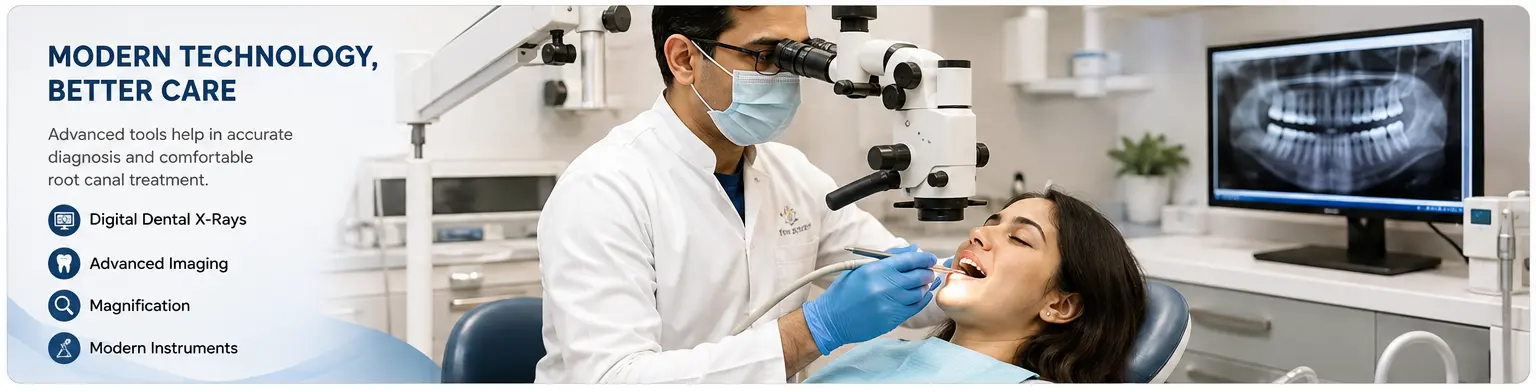
Good tools can help with diagnosis and care planning. Dental X-rays may reveal problems that a basic examination might miss. Ask if the office uses digital imaging or newer diagnostic systems. Using magnification may let the dentist work more carefully in narrow root canals.
They may also have newer tools that help with cleaning and shaping during a root canal. That said, the best results still depend on the clinician. Your dentist should tell you why a certain scan or device is needed.
The American Dental Association recommends that X-ray decisions match your own needs in the clinic.
3. Review root canal steps and plan
Before the work starts, ask the dentist to explain the root canal procedure they plan to do.
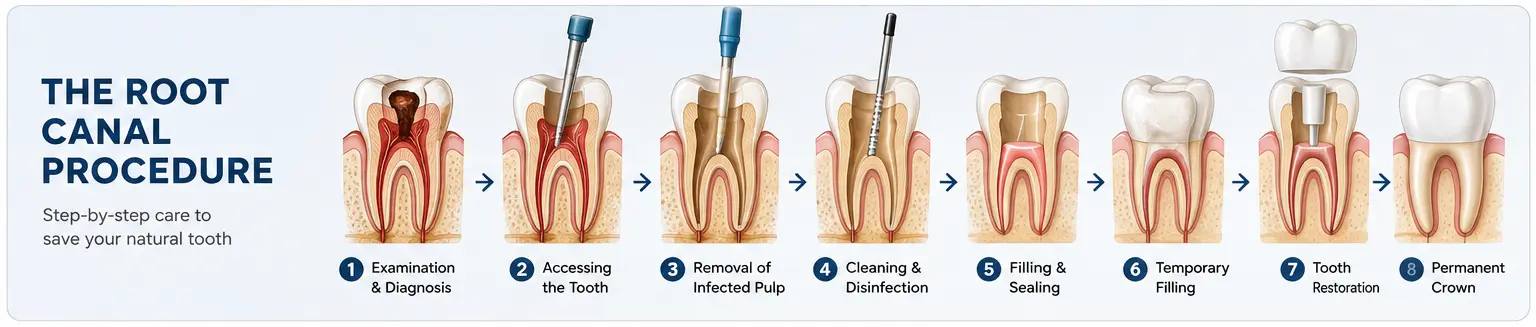
A common plan can include:
– Dental exam and diagnosis
– Dental X-ray when it makes sense based on your situation
– Local anesthesia
– Opening the tooth to reach the infected area
– Taking out the infected pulp
– Cleaning the canals and removing germs
– Filling the root canals and sealing them
– Restoring the tooth
How many visits you need can change. Some people finish in one visit. Other people need more than one. It depends on the tooth and how it looks at the time.
Ask what exact approach your dentist suggests, and ask for the reason it fits your case.
4. Think about comfort and pain control
Many patients ask, “Will a root canal hurt?”
With current local anesthesia, the goal is to keep you comfortable during the procedure. In many cases, patients feel little or no pain if the area is numbed well. Also, an untreated infection can cause pain that may be more intense than the discomfort from the procedure itself.
You can ask about a “pain free” approach, but avoid expecting guarantees. Comfort can vary from one person to the next. Ask how the dentist handles anxiety and discomfort. You can also ask what you might notice during recovery.
After treatment, some patients feel mild soreness or a bit of sensitivity. Usually this fades as the area heals.
5. Check root canal cost and how clear it is
Root canal prices can vary a lot. Your final cost depends on several things. Cost can change based on:
– The tooth that needs care
– How many root canals must be treated
– How complex the case is
– How advanced the infection is
– What follow up work is planned after the nerve part
– Whether you need a crown
– How many visits are expected
Before treatment, ask for a written estimate. Also ask if the quote covers the last step, like the filling or crown. The first fee you see might not be the full bill. Sometimes you will still need a crown or another restoration later.
A fair price can matter a lot. Just do not pick a clinic based on the lowest number alone.
6. Check the clinic’s cleanliness and work standards
Clean care matters in any dental visit. For root canal work, the clinic should use proper cleaning and sterilization steps. Pay attention to the room. Look for clean surfaces and general order. The team should use the right protective equipment.
It may also help to choose a clinic that feels organized and runs in a clear way. That can make you feel more at ease during the procedure. If you can, go by the clinic ahead of time. You can also read patient feedback that talks about the clinic setup and cleanliness.
Good hygiene supports your mouth health. It can also lower risks that should not happen during dental work.
7. Read Reviews and Look at Reputation
Patient reviews can show what the visit was like. Do not trust just one post. Instead, note what many people say in common.
Focus on comments about these points:
– How the dentist talks and explains things
– How the appointment process feels
– Whether people felt happy with the final results
– What the clinic is like day to day
– What happens after the procedure
You can also use online searches to start a short list. Terms like “root canal specialist near me” may help you find options. If you want more names, try to search for the best dentist in Mohali.
Even so, online ratings should not be the only step. Verify the dentist’s training, years of work, the way they handle treatment, and how they care for patients.
8. Confirm Emergency Help and Follow-Up
Serious tooth pain can start without warning. Swollen gums can happen too. A dental abscess is another issue that may need quick care. Ask if the clinic handles emergency visits. This matters if bad symptoms show up when you are not already booked.
Follow-up care counts after the root canal too. Ask what signs are normal during recovery. If you feel any pain that is getting worse, extra swelling or any other symptoms then immediately call your dentist.
If a tooth already had root canal care before and it failed, retreatment might be an option. Your dentist can examine it and suggest what makes the most sense next. If swelling on the face starts to affect breathing or swallowing, get urgent medical help right away.
9. Pick a Dentist Focused on Saving Teeth
Root canal care is meant to clear infection and keep the natural tooth, when that is feasible. Good cleaning inside the tooth, a good seal, and a solid final restoration can support the tooth for the long run.
Some teeth need a different plan. A crack, a chip, or deep decay can change what is possible. Your dentist should also check if the tooth can be rebuilt in a stable way. Sometimes a long lasting filling is enough.
In other cases, a crown is the better choice for added strength and protection. If a tooth can be restored, removal is not always the first step. Your dentist should walk you through the choices and what results you can expect. For harder dental problems, one plan rarely fits all.
When Should You Book a Root Canal Appointment?
If your tooth symptoms keep going or seem unusual, schedule a dental checkup.
Look out for these common signs:
– Ongoing pain in tooth
– Bad toothache
– Pain that stays after hot or cold drinks
– Ongoing sensitivity to hot or cold
– Pain when you chewing or biting down
– Swollen looking gums
– Changes in tooth color
– A tooth abscess
– Infection that returns after it seems to calm down
– Dental issues that will not improve
These signs do not always mean you need a root canal. Other issues can cause similar symptoms. A dentist can check the tooth and judge what is most likely causing the problem.
X-rays can also help if imaging is truly needed. Do not brush off an abscess just because the pain eases for a bit. The abscess can still need dental treatment.
Final thoughts
Finding the right dentist is not only about fees. Look at training and hands-on experience first. Also check what tools the clinic uses. Good planning matters too. Patient comfort is worth the time.
You should also ask about clear pricing. See if the clinic keeps clean standards. Check reviews and reputation. Confirm that they offer help during urgent situations. If you want to keep your natural tooth, bring that up early.
A solid dentist will walk you through the findings in plain language. They should list the possible care choices, not just one. They also need to talk about what recovery may look like. Next, the dentist should go over what the follow up visits look like.
If your tooth keeps hurting and you see swelling or signs of infection, try to book a dental check soon. If you want a skilled root canal dentist in Mohali, you can ask what the visits involve and then pick a plan that matches your tooth.