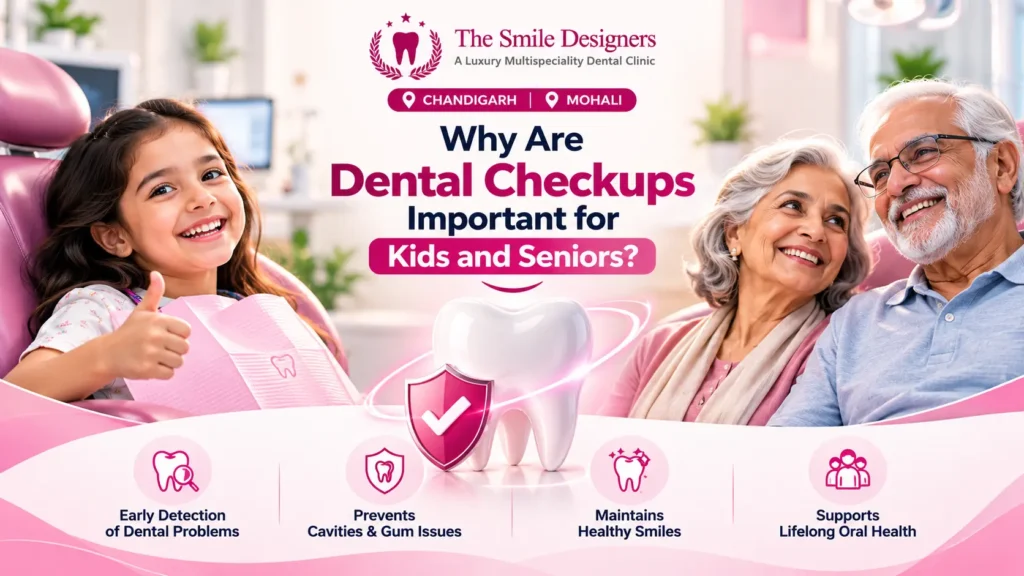
Gum health and dental hygiene need to be practiced by all age groups and especially children because of the variation of dental hygiene issues between children and the elderly.
Some examples are: children facing dental challenges during the different phases of their teeth development, gum disease, tooth wear and tear and also the infamous dry mouth syndrome.
Dental checkups for kids and older patients can begin by a regular checkup. Visiting the dentist regularly can eliminate a great number of dental hygiene issues.
Regular visits to the dentist for the whole family can provide a number of advantages, some of which are described in more detail in the following.
Did you Know?
According to the Centers for Disease Control and Prevention (CDC), around 12.5 percent of adults aged 65 and over in the US who had all their natural teeth had at least one untreated decayed tooth from 2017 to 2020. This statistic shows why oral health should be monitored more as people age. Regularly visiting the dentist will help treat decay in the early stages and avoid further complications. More statistics and data on decay in older adults can be found in the oral health report from the CDC.
Why Are Regular Dental Checkups Important at Every Age?
Frequent dental appointments can lead to better preventive care and long term oral hygiene.
Detecting Dental Issues Early
A dentist can see damage and concerns such as gum inflammation and the start of a cavity in a dental exam. Other dental concerns can develop in the absence of pain. When a concern is found, a dentist can provide advice for the best way to address it.
Long Term Oral Health
Without regular dental appointments, plaque and tartar can accumulate on teeth, increasing the chances of getting cavities and gum disease. Professional dental cleanings remove the deposits that are beyond what an everyday brushing can remove.
Regular dental checkups ensure both your gum health and your oral health are improved. Early diagnosis and treatment are possible due to early checkups.
Why Are Dental Checkups Important for Kids?
Oral health needs of children are always changing and will keep on changing throughout childhood and the developmental years. As a result, regular checkups from a pediatric dentist in Chandigarh are essential.
Addressing Early Issues
Cavities, one of the most common oral health issues, are largely caused by the intake of high sugar diets and improper or lack of brushing and the subsequent accumulation of plaque.
As part of their dental exams, pediatric dentists also check for the early signs of cavities in their young patients.
Children’s Preventive Dental Care
As part of their services, pediatric dentists provide advice on how children can establish a healthy diet and good brushing habits, along with providing protective dental sealants and fluoride treatments to help prevent tooth decay in young patients.
Baby Teeth
Baby teeth allow children to speak, chew, and retain space for the permanent teeth. The pediatric dentist closely monitors the baby teeth throughout their development and care for them at each of the patient’s regular checkups.
Monitoring Permanent Teeth
As part of their permanent teeth care, pediatric dentists observe their young patients’ permanent teeth as they emerge. Delayed or slow permanent tooth emergence can signify concerns that may need further intervention, including issues of crowding or improper bite alignment.
Parents often seek early orthodontic evaluation and advice regarding the best treatment plan from the best orthodontist in Chandigarh, if a child shows early symptoms of crowded or improperly positioned teeth.
Creating Healthy Oral Habits
Frequent visits to a pediatric dentist for oral care help young children become more accustomed to it. Children’s oral care habits, as well as the oral care practices that children’s parents implement at home, help guide pediatric dentists.
Why Are Dental Checkups Important for Older Patients?
Aging also changes a person’s teeth and the soft tissues of the mouth, necessitating a regular dental checkup to address and manage those issues.
Likewise, the many NRIs who live outside of India can easily visit an NRI dentist in India to get their regular dental checks and denture evaluations, or for other personalized dental services during their visits to India.
Gum Disease Prevention
Plaque that forms on and around teeth and gums causes gum disease. It causes gum inflammation and recession, bleeding, and teeth that become loose. If treated in the early stages, seniors may be able to prevent gum disease, as well as tooth loss.
Issues Caused by Aging
The elderly may find their teeth become sensitive and worn. Many older adults will also have filling related problems. Lack of saliva production also occurs due to some medicines and medical issues. Due to the side effects of certain medications and some illnesses, oral cavity dryness can become a problem. Regular dental exams are necessary to help dentists understand age-related issues, such as tooth sensitivity.
Caring for the Elderly’s Dental Health and Dental Prosthetics
Dentists examine the dentures, bridges, crowns and implants that seniors may have. If dentures are not fitted correctly, it may be painful or difficult for patients to chew their food. Dentists also look for signs of unusual change in oral tissues. Older adults should have oral cancer screenings as part of their comprehensive dental checkups.
How Do You Prepare For A Regular Dental Check-up?
A typical dental exam includes an analysis of the patient’s mouth to detect areas requiring improvement.
| Checkup Stage | What the Dentist Does |
| Teeth examination | Checks for cavities, cracks, wear, and damaged restorations. |
| Examine the Gums | Examine the mouth for inflammation and bleeding. |
| Oral screening | Check the cheeks, tongue, and the soft tissues of the mouth. |
| Professional cleaning | Removes plaque and tartar when needed. |
| Personalised advice | Provides brushing, flossing, diet, and preventive care recommendations. |
Dentists use X-rays when more diagnostic info is required. Patients can have age-specific dental care through X-rays to receive the right care.
How Often Should Patients of Different Ages Visit the Dentist?
There are many variables to take into consideration when figuring out the frequency of dental exams. Oral health, history of disease, and an individual’s risk of disease are all factors that influence how often a person should have their dental exams.
Dental Exam Frequency for Kids
Ideally, a child’s first dental appointment should occur within six months of the appearance of their first tooth. In addition to the recommendation from the American Academy of Pediatric Dentistry, many kids’ dentists advise that a first dental exam take place before the first birthday. A risk assessment should occur for each child based on cavities and tooth development.
Dental Exam Frequency for Older Adults
Most older adults visit the dentist every six months, but this interval is not ideal for all adults. Adults who have dry mouth, gum disease, or many dental restorations, need frequent exams. In addition, there is an increasing need for dental exams for older adults who already have oral health problems and who are already in need of constant dental care.
Dental tourism in India is also a great option for international patients who plan to get necessary dental care, as they can easily book preventive services and treatments to be taken care of during their visit.
What Happens If a Kid or an Older Adult Skips a Dental Exam?
If a patient decides to skip a dental exam, they may allow their oral health to further deteriorate without treatment.
Risks for Children
- Untreated cavities in children can be the cause of pain, infection, and may result in difficulty in eating.
- Loss of a child’s baby tooth at an early age will affect the space that should be reserved for the child’s permanent tooth.
- There are some children that experience pain from their teeth that can result in the child being unable to get quality sleep and may interfere with a child’s concentration at school.
Risks for Older Adults
- Gum disease left untreated has the potential to impact the structures supporting teeth.
- If gum disease has progressed, this can cause teeth to shift and possibly fall out, or even cause gum recession.
- Skipping dental appointments could mean losing out on an opportunity to detect possibly cancerous growths in the mouth.
Having routine exams helps in earlier detection and earlier treatment of gum disease.
Tips For Improving Oral Hygiene in Between Dental Visits
Maintaining a consistent routine at home will promote better oral health in both kids and older adults.
Oral Health Habits for Kids
- Brushing and Flossing Recommendations
- Children should brush with a fluoride toothpaste of the correct concentration at least twice daily.
- It is best to start brushing between teeth if there are adjacent teeth that touch.
- The best practice for older kids and teens to avoid sugar is to avoid drinks and snacks that are high in sugar.
Oral Health Habits for Seniors
- Seniors should brush their teeth twice a day with a fluoride toothpaste. The toothbrush should be a soft bristled brush.
- Seniors should floss between teeth at least once a day and clean between teeth with the use of interdental brushes as necessary.
- Dentures should be cleaned and worn only as instructed by their dentist.
- A senior with persistent dry mouth should bring this issue to the attention of their dentist.
Healthy oral hygiene habits across the lifespan keep teeth and gums in good health in between appointments.
Conclusion
Regular dental checkups help kids and older adults to develop and maintain healthy teeth and gums respectively. They give dentists the chance to spot tooth and gum related issues at the onset.
Regular dental visits help ensure personalized oral health education and preventive care services can be delivered to you and your loved ones. These along with brushing and flossing and healthy eating are the foundations for oral health throughout your life.
Protect the smiles of your loved ones by scheduling regular dental checkups at the recommended frequencies of your dentist.
Frequently Asked Questions
- How should a parent explain dental visits to their child?
Children usually have the most questions about going to the dentist. Parents can start by simply using words that give the dental office a more positive association. A good way for a parent to describe the visit is by letting their child know what is going to happen in the simplest, most honest terms possible. Parents can instead find a pediatric dentist to help their child feel at ease.
- Should dental X-rays be used on children or elderly people?
When used appropriately and with good reason, X-rays are perfectly safe. Dentists do not want to use an X-ray on you more than necessary, so they take a patient’s specific needs into account when recommending X-rays. Because of children’s sensitive bodies and their susceptibility to higher radiation doses, radiation exposure in children may require a more specialized focus and different imaging techniques.
- Are dental X-rays safe for seniors who have diabetes and heart conditions?
Yes, they are safe. Patients with these conditions should always let their dentists know. There are special circumstances where extra measures and coordination with the patient’s primary doctor is required, but generally, dental check-ups can still take place safely.
- Is it necessary for elderly people without any teeth to visit a dentist?
The answer is Yes. Good oral hygiene is not confined only to having teeth. The hygiene of the whole mouth, including the gums, the tongue, and dentures, also falls under the definition of oral hygiene. Dentists also examine the fit of the dentures. In addition to that, an oral examination is capable of diagnosing infections, irritation and even looking for suspicious areas.
- Do elderly people need to give the dentist a medication list?
Yes, oral care is impacted by medications in a multitude of ways including dry mouth, gums changes, and even increased risk of bleeding. If patients let their dentist know of all medications, dentists are more likely to identify any oral health problems linked to the medication and be able to provide proper dental care.