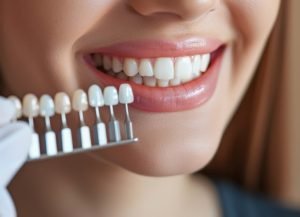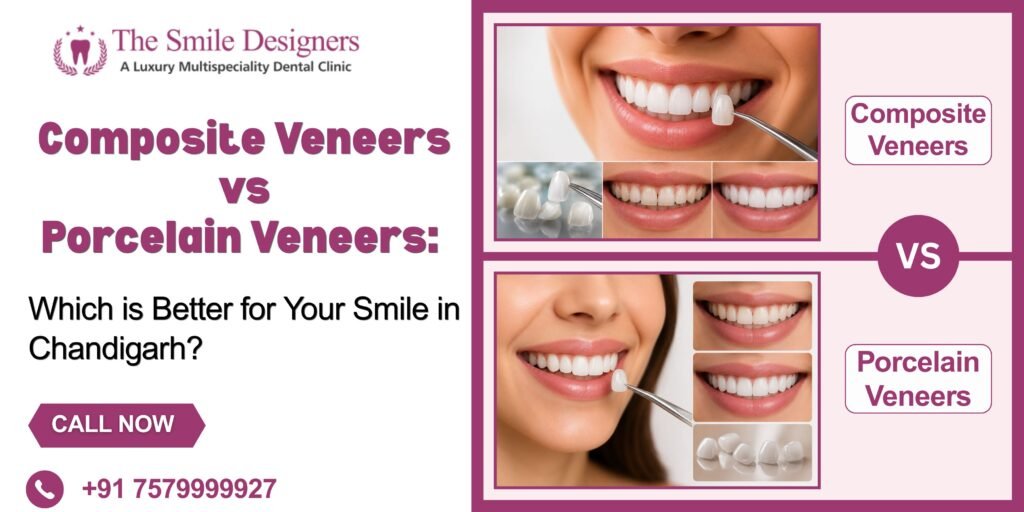
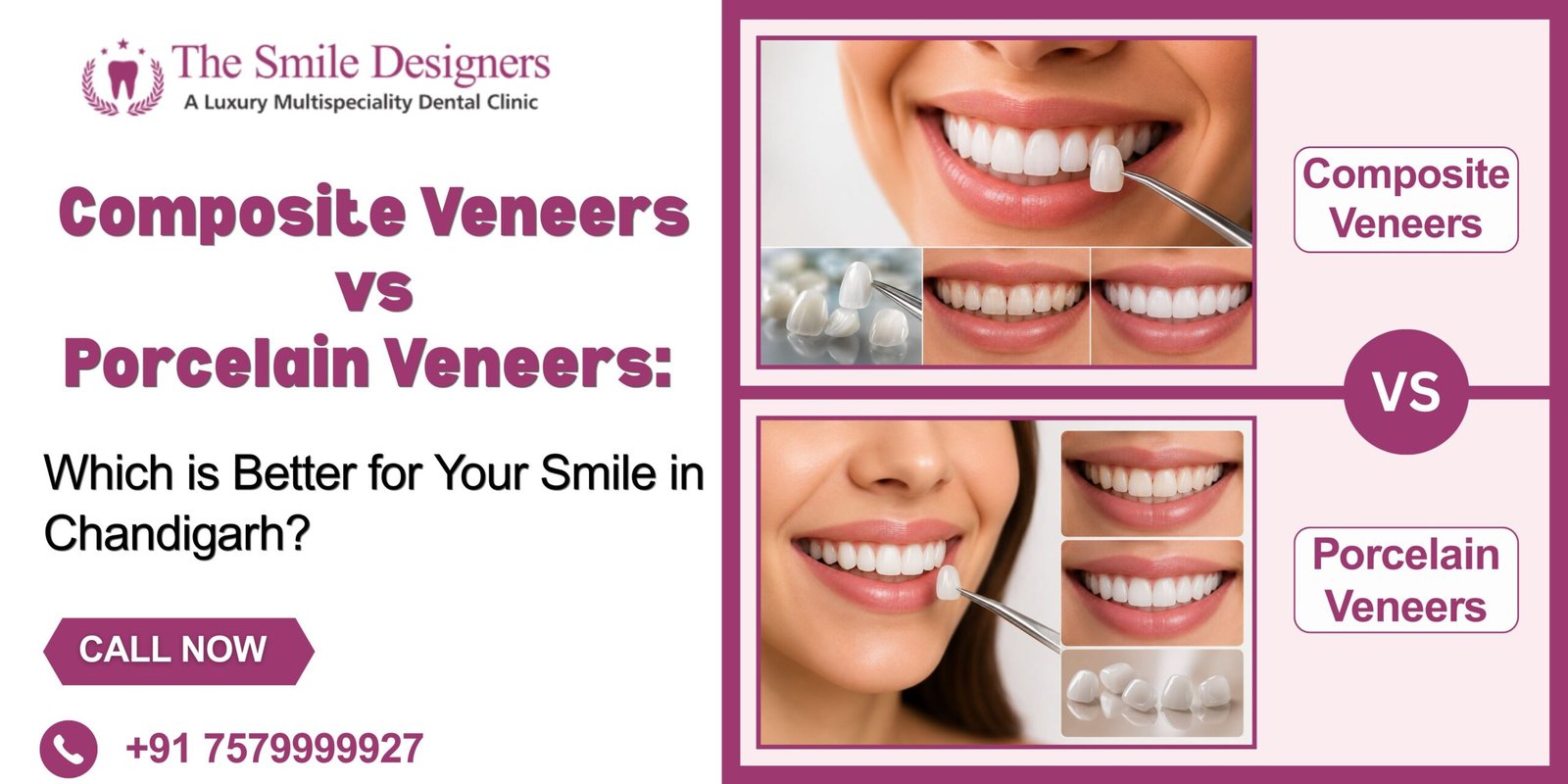
A chipped front tooth. A stain that whitening toothpaste just won’t touch. A small gap you keep noticing in photos. These are the little things that are driving people to go for veneers in the first place. As you begin the research, you are hitting the same question over and over again: Composite Veneers vs Porcelain Veneers, which one is the right choice for you? They can address the same concerns, but they work in very different ways and the choice is yours based on your smile, your budget and how long you expect the results to last.
Let’s take a simple, non-technical look at what makes them different.
Key Takeaways
- The composite veneers are less expensive and may require only one appointment but are more prone to staining and have a shorter lifespan than porcelain.
- Porcelain veneers are more expensive initially and require two appointments, as they are each customized in the dental lab, but will last many years longer and will retain color and shape.
- Porcelain is the better choice for front teeth for a more natural, light-reflecting finish.
- For those who like to try out a smile change without taking the plunge, composite is a great low commitment option.
- While there is no “best” option, it depends on your budget, timeframe, and your dentist’s assessment.
What Are Dental Veneers?
The veneer is a thin shell which is bonded to the front of a tooth. It’s simply an idea of concealing what is not liked in the color or shape of a tooth without touching the entire tooth below. Veneers are typically the go-to treatment for a dentist when their patient has:
- Teeth that are discolored or stained
- A chipped or worn-down tooth edge
- A visible gap between front teeth
- Mild crookedness that doesn’t really need braces
- Teeth that have flattened or thinned out over the years
Veneers sit right at the front of the smile, which is why they fall under the wider umbrella of types of dental veneers people consider for a cosmetic fix.
What Are Composite Veneers?
Consider composite veneers to be sculptural rather than constructed. A dentist uses a tooth-colored resin that is smoothed and shaped by hand until it looks right, in the tooth. Usually, a lab appointment can cover the entire waiting period and no lab is required.
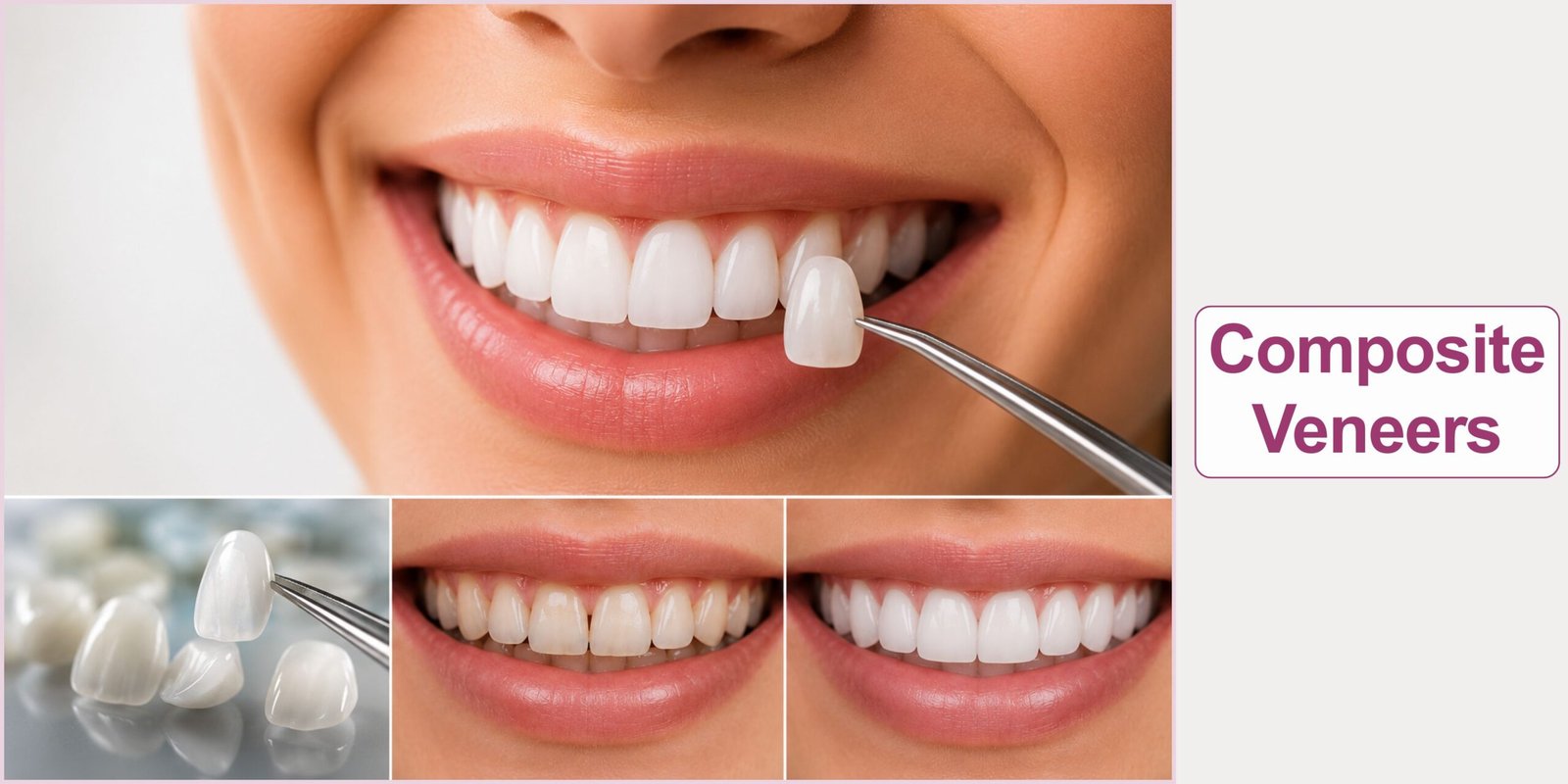
What’s good about composite veneers:
- Costs less than the porcelain option
- Done in one visit, often the same day
- Easy to fix if it chips later on
What to watch out for:
- Picks up stains a bit more easily over time, especially from tea, coffee, or smoking
- Doesn’t last quite as long as ceramic veneers
- Looks good, but not quite as glassy or lifelike as natural enamel
What Are Porcelain Veneers?
Porcelain veneers are another story. They are not formed in the chair, but in a dental lab by taking detailed imprints of your teeth and bonding them on when they are finished. It is this additional step that is what makes porcelain tend to outlast when a person is looking to have a full smile make over for years to come.
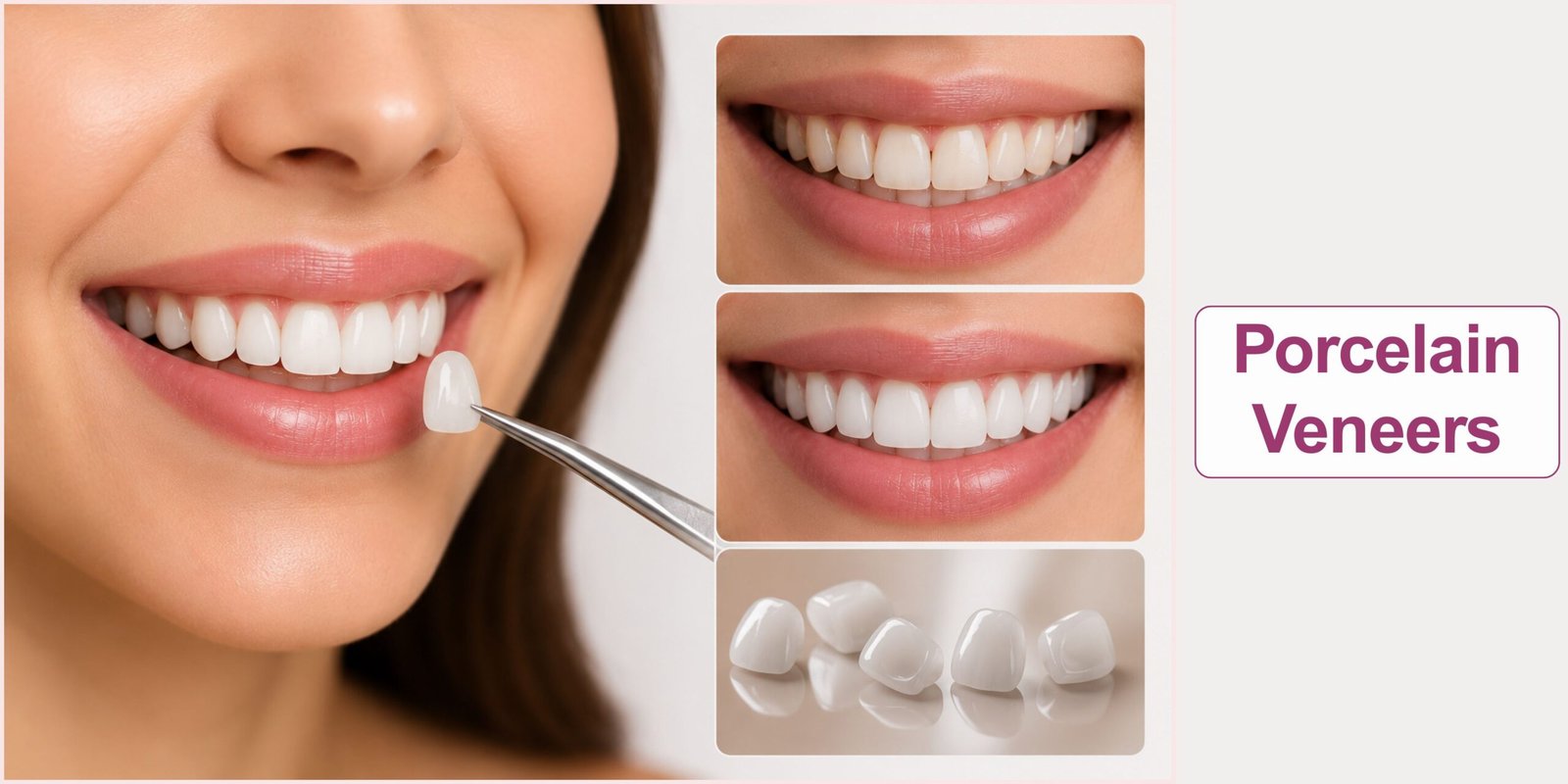
What’s good about porcelain veneers:
- Mimics how natural enamel catches and reflects light
- Holds its color well, even with coffee or wine
- Tends to last much longer with normal use
- Gives a refined, natural-looking finish
What to watch out for:
- Costs more going in
- Takes a couple of visits since the lab needs time to make them
Composite Veneers vs Porcelain Veneers: Side-by-Side Comparison
| Feature | Composite Veneers | Porcelain Veneers |
| Appearance | Good | Excellent |
| Durability | 4–7 years | 10 to 15+ years |
| Stain Resistance | Moderate | High |
| Treatment Time | One visit | Two or more visits |
| Repairability | Easy | More complex |
| Cost | Lower | Higher |
| Long-Term Value | Moderate | Excellent |
Someone once said a smile is the simplest thing you can offer the world but the material behind it is a much more personal call.
Did You Know?
The National Institutes of Health notes that tooth enamel is the hardest substance in the human body. But here’s the catch, according to peer-reviewed research hosted by the NIH: once enamel is reshaped or worn down, it doesn’t grow back on its own. That’s a big reason why even the small amount of enamel prep needed for veneers is worth planning carefully with your dentist.
Which Veneers Look More Natural?
Actually, real teeth are not flat: light passes through the enamel just a little, and bounces off of the layer below, which is what gives teeth that soft, glassy look. That’s why porcelain is particularly chosen for the front teeth that are so close to the face. This is also good-looking and lends a bit more rigidity when held up to strong light, but it is not as hard as composite resin. That little difference will typically swing the weight in porcelain’s favor if the finished result is a completely natural camera ready appearance that you’re looking for.
Which Veneers Last Longer?
The life of your veneers isn’t the only thing that depends on the material, it depends on you as well. All of these contribute, including biting hard foods and grinding during sleep and the quality of your teeth brushing and flossing. Regular dental checkups will ensure that small problems are identified before they become larger. Generally, porcelain is more durable over time than other materials, thanks to its density. The composite can last for many years as well, but requires a bit more conditioning to achieve this.
Who is a Good Candidate for Composite Veneers?
Composite usually makes sense for people with smaller fixes in mind, or anyone who’d rather test the waters before going all in. That tends to include people with:
- A small chip or edge that’s worn down
- A minor gap between front teeth
- A tighter budget for cosmetic work
- An interest in trying a smile change before committing long-term
Who is a Good Candidate for Porcelain Veneers?
Porcelain tends to suit people thinking of the bigger picture. That usually means someone with:
- Plans for a full smile makeover
- Discoloration that’s deep and won’t lift with whitening
- A focus on results that last for years, not just a season
- A job or lifestyle where a polished smile genuinely matters
Cost Comparison: Composite vs Porcelain Veneers in Chandigarh
Rather than throwing out numbers that won’t apply to your case, it’s more useful to know what actually moves the needle on Porcelain Veneers Cost and composite pricing. A few things matter most:
- How many teeth need treatment
- The quality of material your dentist uses
- The dentist’s own skill and experience
- How much planning goes into designing your new smile
If you’re researching Veneers cost in Chandigarh, the honest answer is that it varies from person to person. A proper consultation is really the only way to get a number that means anything for your teeth.
How to Choose the Right Veneers for Your Smile
Choosing between Porcelain veneers in Chandigarh and Composite veneers in Chandigarh really comes down to a few honest questions you can ask yourself. What do you actually want your smile to look like? What can you comfortably spend, not just today but over the years ahead? How long do you want this to last? And is your mouth healthy enough right now to support the treatment? A dentist who actually examines your teeth and listens to your goals is still the best way to land on the right answer.
Why Patients Choose The Smile Designers for Veneers in Chandigarh
Where you get your veneers done matters just as much as which material you pick. A clinic that uses digital smile assessments and builds a treatment plan around your face, not a generic template, tends to deliver results that actually look like you, just better. Experienced cosmetic dentists working with up-to-date dental technology can plan a smile that fits your features naturally in everyday light. That’s the kind of thoughtful approach behind real best veneers for smile makeover results, backed by solid cosmetic dentistry Chandigarh standards.
Frequently Asked Questions
Q1. Are composite veneers cheaper than porcelain veneers?
Ans. Yes, composite costs less to start with, but porcelain often works out as better value once you factor in how long it actually lasts.
Q2. Do porcelain veneers stain over time?
Ans. Not easily porcelain holds its color well over the years and resists stains far better than composite resin generally does.
Q3. Can composite veneers be repaired easily?
Ans. Yes, a chipped or worn composite veneer can usually be fixed right in the dental chair, often within just one short visit.
Q4. Which veneers last longer, composite or porcelain?
Ans. Porcelain typically lasts years longer than composite veneers, especially when paired with regular care and good oral hygiene.
Q5. Do veneers damage natural teeth or cause pain?
Ans. Veneers need only minimal enamel preparation, and the process is generally comfortable when handled by a skilled, experienced dentist.
Conclusion
Then who is the winner between Composite Veneers and Porcelain Veneers? Well, neither alone, really. As an alternative, Composite provides a fast and inexpensive solution to fix things up when they are not that big.
Although porcelain is more expensive, it will save you time and your natural appearance. It’s really all about what you want your smile to do for you, and for how long. Even if you have a strategy in place, the most straightforward approach to make that strategy a reality for your teeth is to discuss it with your dentist.
At The Smile Designers, we can help you choose the veneer option that best suits your smile goals.